
Anatomical molding
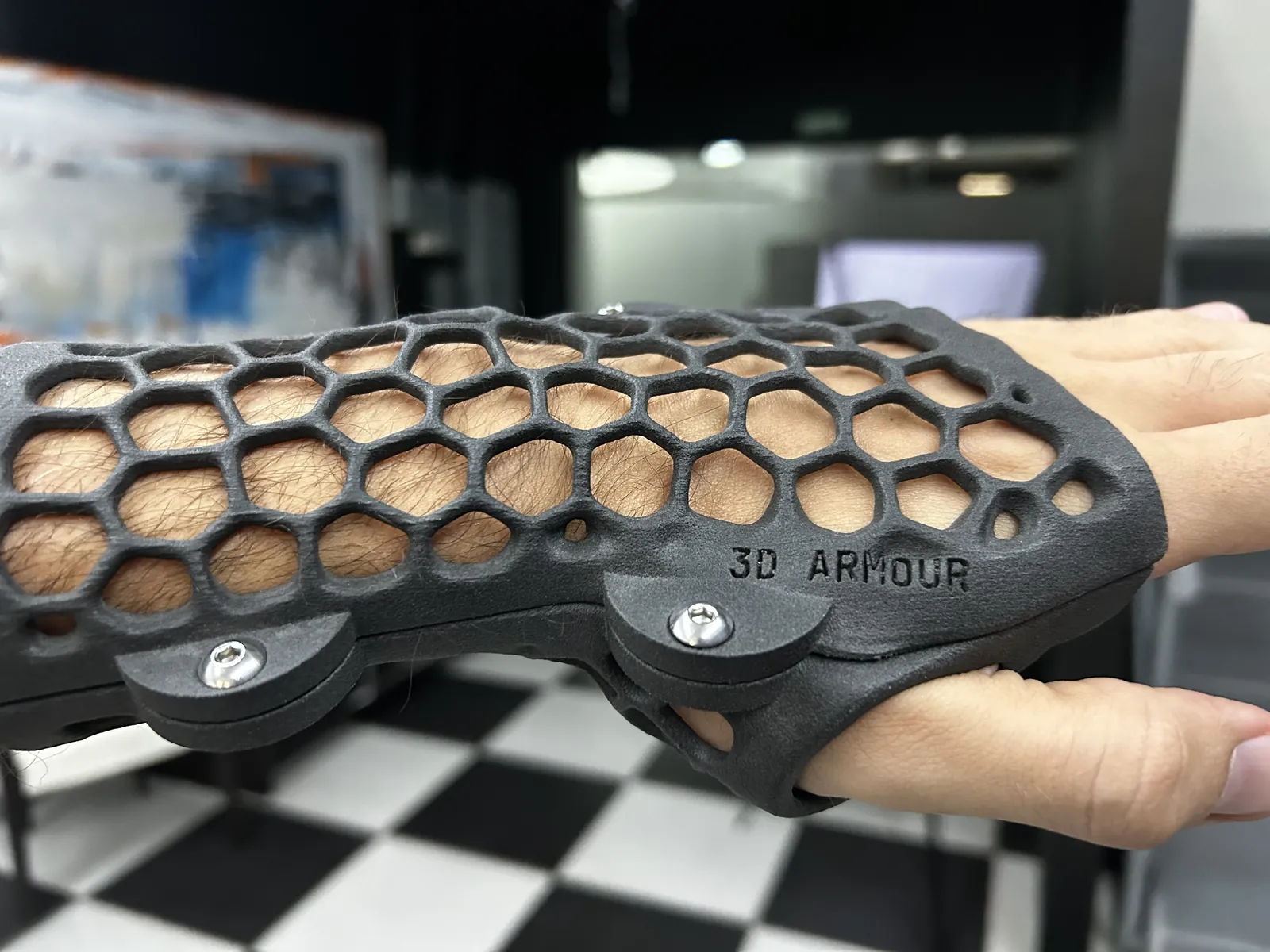
The design incorporates every bony prominence detected in the scan, so the device immobilizes without creating pressure points.
Technology
3D Armour works where medicine, biomedical engineering and industrial design meet. Every device is the result of a precision scan, a parametric design and a print in biomedical-grade nylon.
The material
The PA12 nylon used by 3D Armour is a polymer engineered and treated for prolonged contact with human skin. Its finish is polished and silky, without the rough edges and friction points of a conventional cast.
The material has been tested under ISO 10993-5:2009 (in vitro cytotoxicity) and ISO 10993-10:2010/(R)2014 (skin irritation and sensitization). These standards assess the biocompatibility of the material in contact with skin; the non-porous finish and continuous ventilation reduce retained moisture, the usual cause of odor under a cast.
lighter than a conventional cast of the same size
none; patients shower, swim and wash the device
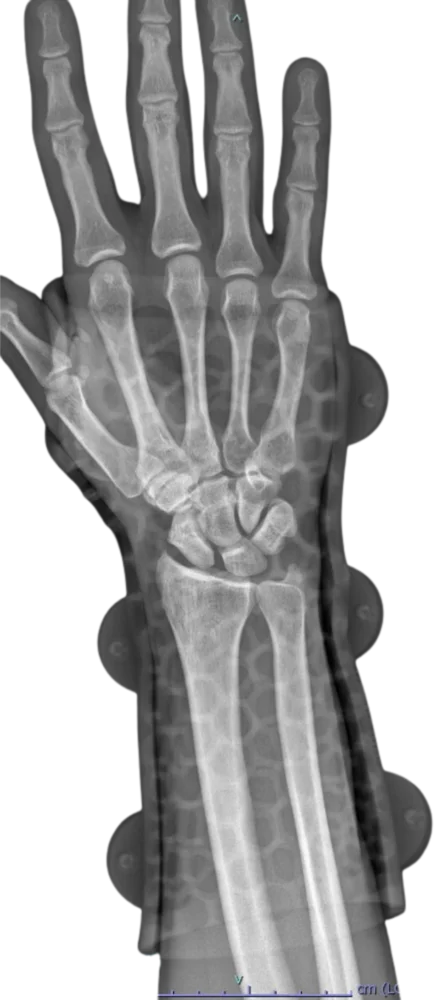
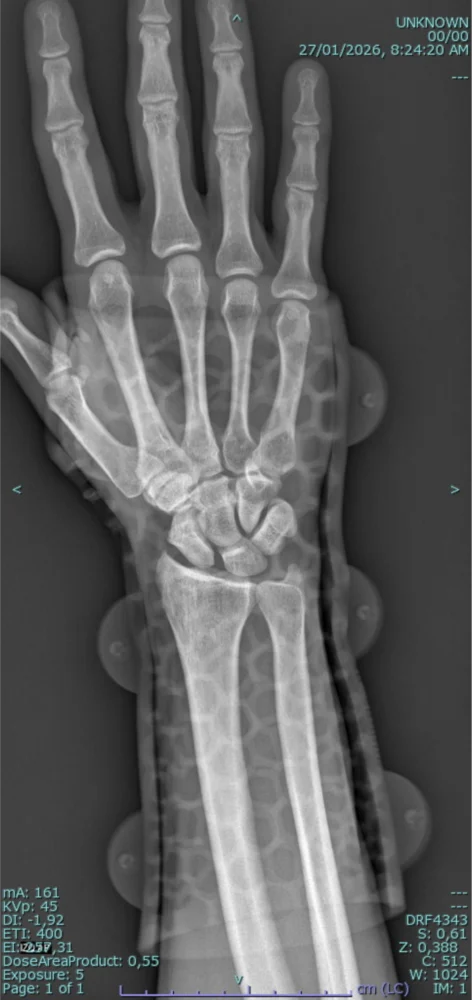
the X-ray beam passes through: follow-up without removal
tested for cytotoxicity (-5) and skin irritation (-10)
contoured texture, no rough edges or friction points
of printing per device, in Costa Rica
ISO 10993-5 and ISO 10993-10 assess the biocompatibility of the material in contact with the body. They are not a regulatory approval of the finished device.
The capture
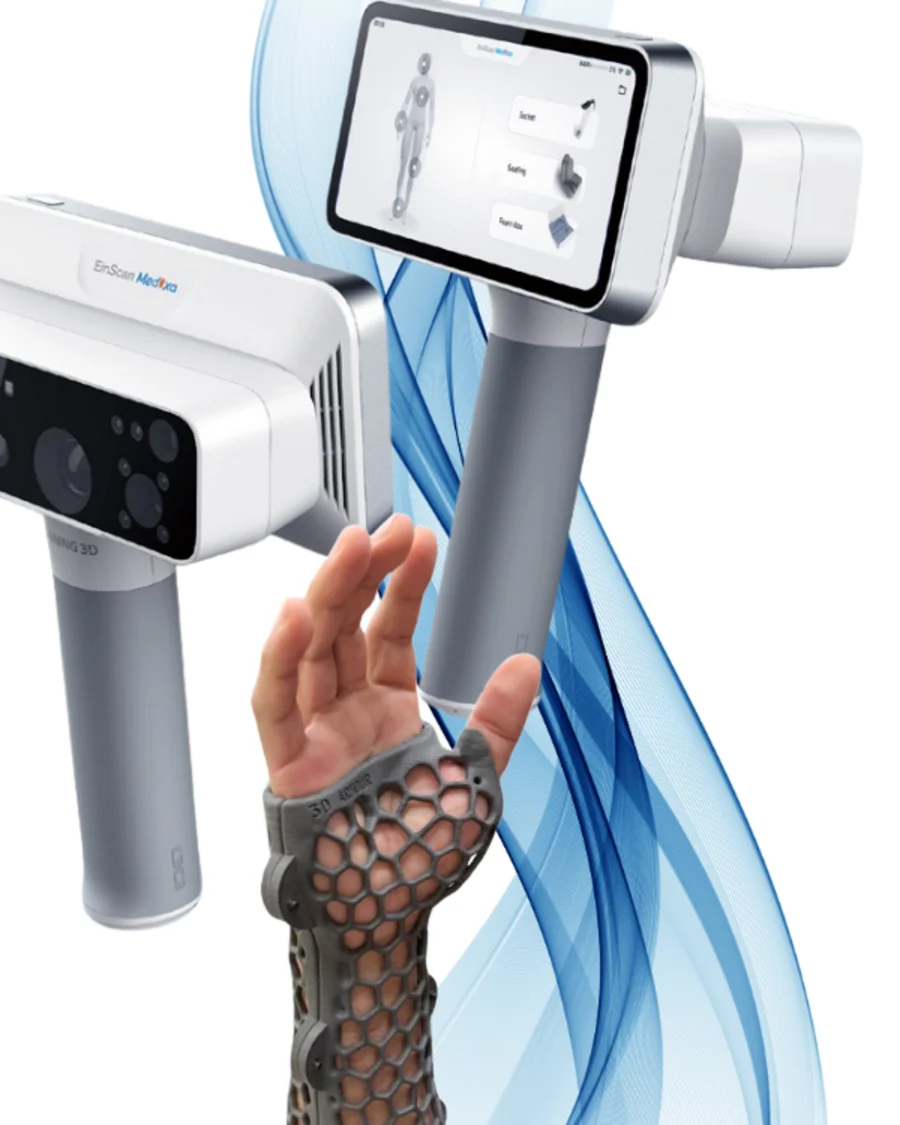
Capture is performed with an EinScan Medixa optical scanner: the device sweeps the limb without touching it and reconstructs its geometry in three dimensions down to the millimeter, including every bony prominence. The scan takes three to five minutes, is painless, uses no radiation, and is performed with the limb in the therapeutic position prescribed by the physician.
The design
A parametric design is built on top of the scan mesh, defining thickness, angles, support points and lattice openness according to the clinical indication. The result immobilizes what needs immobilizing and frees the rest: the device holds without compressing.
The design incorporates every bony prominence detected in the scan, so the device immobilizes without creating pressure points.
Screws and straps follow the evolution of swelling without manufacturing a second device.
Mesh density varies by zone: more material where rigidity is required, more opening where ventilation is required.
Rough edges and friction points are removed to protect the skin throughout the immobilization period.
Clinical advantage
PA12 nylon is radiolucent: the X-ray beam passes through it, allowing bone healing to be assessed with the device in place. For the physician this means fewer refittings and finer follow-up; for the patient, fewer visits and less handling of the injured area.
Manufacturing
Manufacturing takes place in Costa Rica. Between receiving the order and the finished device there are 6 to 12 hours of printing and finishing, and delivery is completed in under 24 hours. Producing locally also means hands-on technical support and same-day turnaround on adjustments.
Message us on WhatsApp and we will tell you which device fits, how the process works and when it will be ready. If you are a physician, ask about the 3D Affiliate Program.
